
Why most studying fails (and what to do instead)
Most people don't struggle because they're "bad at school." They struggle because popular study habits feel productive while teaching your brain very little.
If your study session feels easy, you might be practicing familiarity — not learning.
Quick table of contents
- Rule #1: Make your brain retrieve
- Rule #2: Space your practice
- Rule #3: Use “good” mistakes
- A 30-minute study plan
- Short video walkthrough
- FAQ
Rule #1: Make your brain retrieve
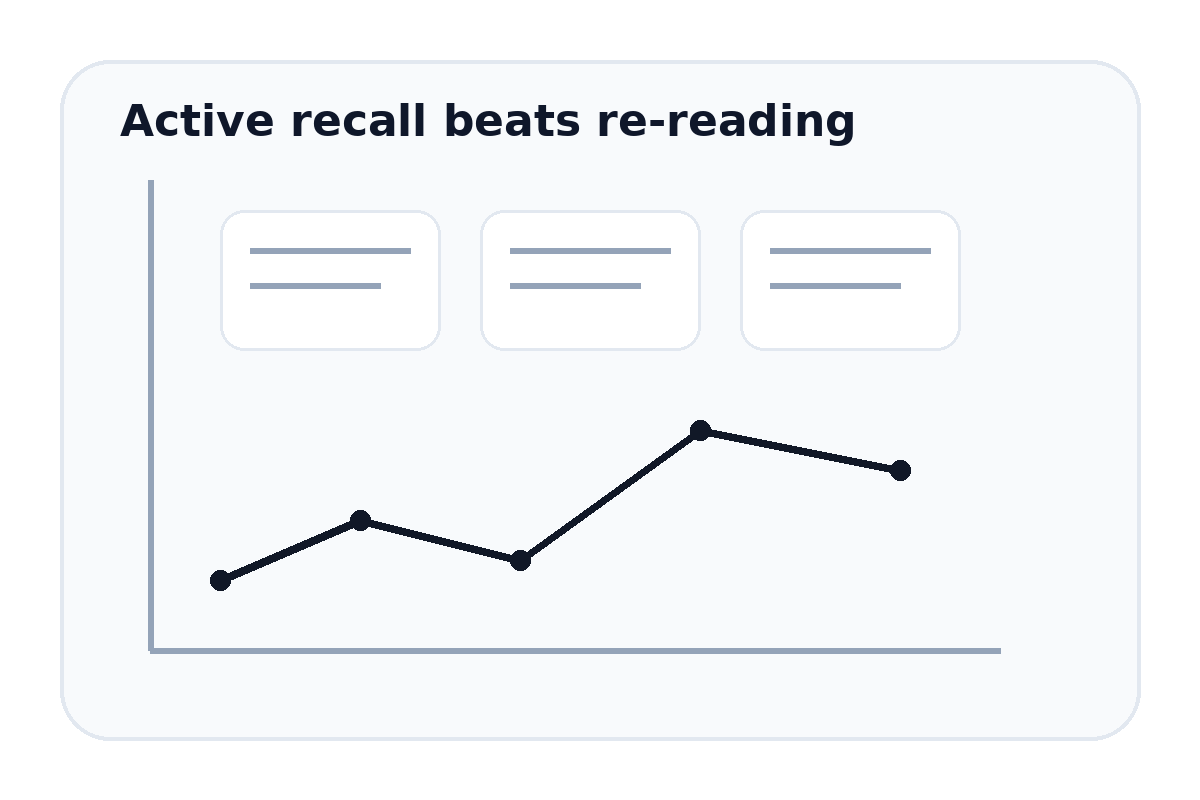
Active recall means you try to pull information from memory before looking at your notes. It's uncomfortable — and that's the point. Retrieval is the workout that makes memory stronger.
Rule #2: Space your practice
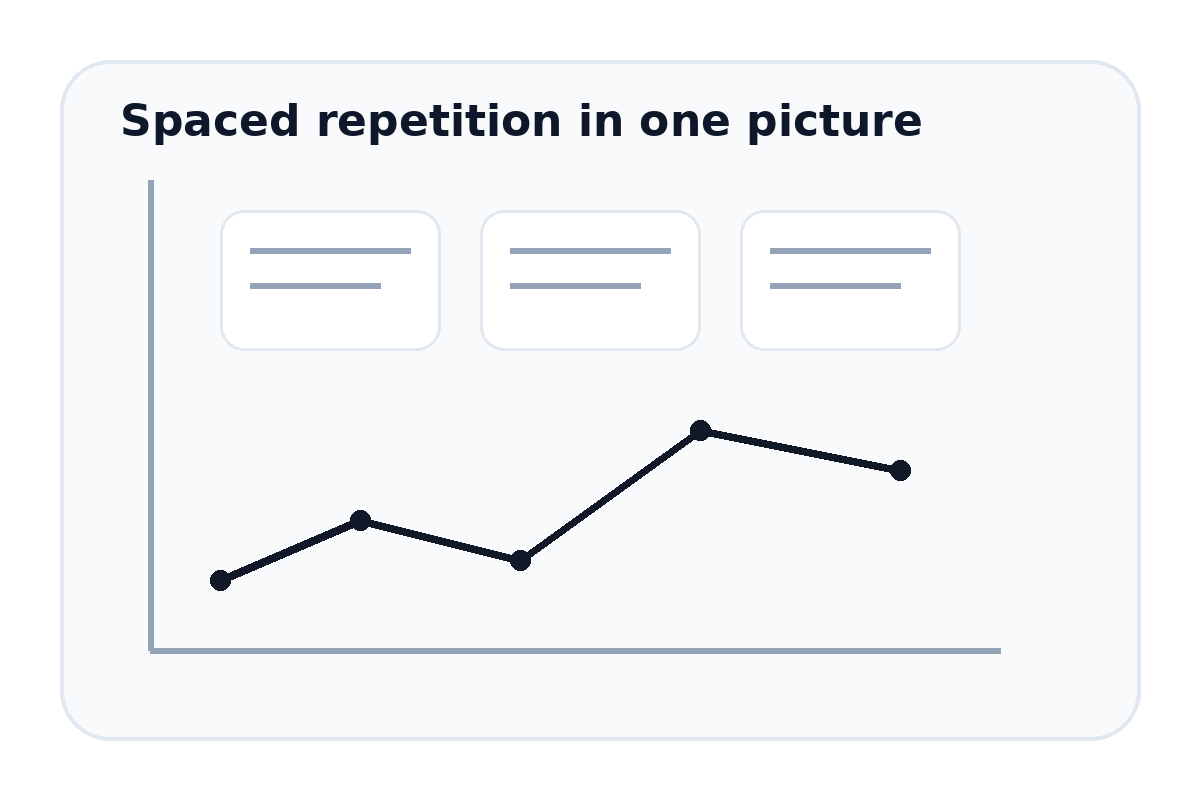
Instead of one long cram session, do shorter sessions across multiple days. This is spaced repetition. It feels slower, but it wins long-term because you practice right before you forget.
Rule #3: Use “good” mistakes
When you test yourself and get something wrong, you create a high-quality signal for what to fix. The key is to correct immediately and practice the same idea again later.
A simple 30-minute study plan
- 5 min: Skim headings and write questions you want to answer.
- 15 min: Read a small section, then do active recall (no notes).
- 5 min: Correct gaps and rewrite one “cheat-sheet” sentence.
- 5 min: Quick self-quiz (flashcards or 5 questions).
Repeat this plan 3–4 times per week. If you're studying for a test, add a longer practice exam once per week.
Short video walkthrough
Prefer learning by watching? Here's a short, beginner-friendly walkthrough to reinforce the concepts above:
Video is embedded from YouTube (privacy-enhanced mode). If it doesn't load on your host, replace the URL with any education video you prefer.
FAQ (U.S. learners)
Does this work for AP classes or college? Yes. Retrieval practice + spacing applies to almost any subject — from history to biology to certification exams.
What if I only have one day? Do multiple mini sessions: 25 minutes study + 5 minutes break, repeat 3–4 times. Spend most of your time testing yourself.
Is rereading ever useful? It can help with familiarity, but it shouldn't be your main tool. Pair short rereads with active recall.